Getting started | 5 min read | Updated 2026-06-03
Your dog's first hydrotherapy session
What happens at the first appointment, how to prepare, and how to help a nervous dog feel safer.
Quick answer
The first visit usually includes history, assessment and a gentle introduction.
A first hydrotherapy visit is usually slower and more careful than owners expect. The therapist needs to understand your dog's health, confidence, movement and goals before doing much in the water.
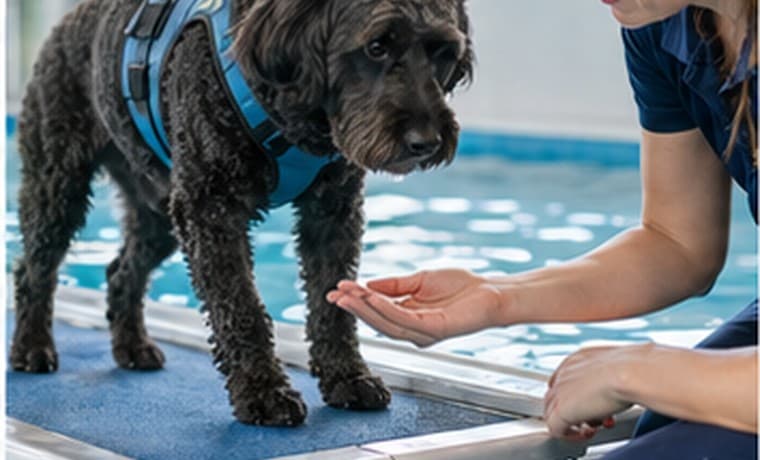
For nervous dogs, a successful first session may simply mean calm entry, a short supported exercise and leaving relaxed.
Use this guide as a practical starting point, then compare suitable providers in the centre directory. A directory listing can help you shortlist local options, but the final choice should be based on your dog's health history, veterinary advice, the centre's assessment process and how clearly the team explains their approach.
Before booking, write down your dog's diagnosis if known, current medication, recent surgery dates, exercise limits, behaviour around water and any worries you want to raise. This makes the first call more useful and helps the centre explain whether hydrotherapy, physiotherapy, swimming, underwater treadmill work or a different route may be appropriate to discuss with your vet.
Before you arrive
Follow the centre's feeding guidance, usually avoiding a meal close to the session. Bring any requested vet paperwork and tell the team if your dog is anxious, reactive or sensitive to touch.
During the session
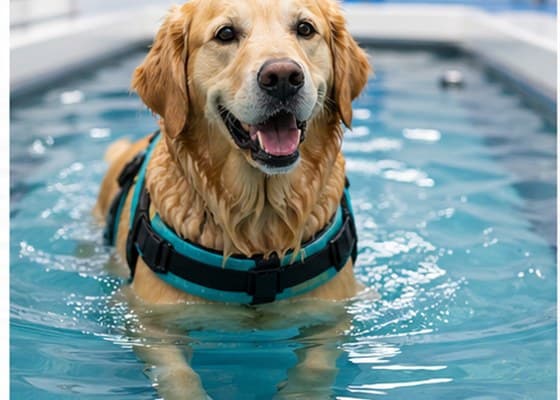
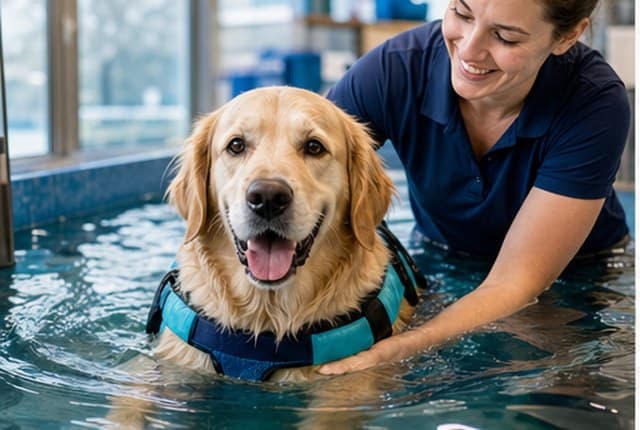
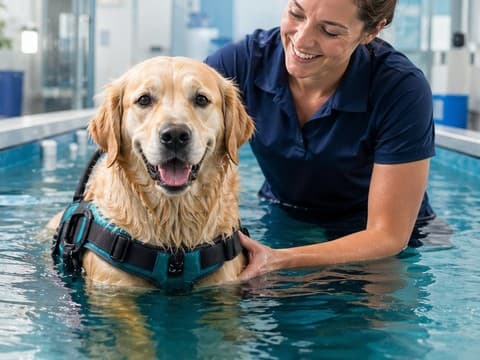
Your dog may be fitted with a life jacket or harness. The therapist may assess walking, posture, muscle condition and comfort before introducing the pool or treadmill.
The water work may be very short at first.
After the session
Many dogs are tired afterwards. Keep the rest of the day calm, follow any instructions and report unusual soreness, lameness or behaviour changes.
How to use this guide
Start with your dog's current problem rather than a treatment label. This guide on your dog's first hydrotherapy session is meant to help you ask better questions before booking.
Write down what has changed, when it started, any vet advice you already have, and what you want your dog to manage more comfortably. Use that note when you contact a centre.
What good providers should explain
A responsible provider discussing your dog's first hydrotherapy session should explain whether veterinary referral or consent is needed, who assesses your dog, how progress is recorded, and how sessions are adapted for nervous, older or post-operative dogs.
Ask about water hygiene or land-exercise safety (as relevant), how dogs enter and leave the facility, what equipment is available, and how many dogs are treated at once.
Questions to take to your first call
Before booking around your dog's first hydrotherapy session, ask whether the centre offers therapeutic hydrotherapy, fitness swimming, underwater treadmill work, physiotherapy or a combination — and which option they think fits your dog.
Also ask how the first appointment is structured, whether vet notes are needed, what to bring, how long a session lasts, and what signs would make them stop or change the plan.
- Do you require vet referral or consent?
- Who assesses my dog and records progress?
- Is pool work, treadmill work or physiotherapy most relevant?
- How do you support nervous or older dogs?
- Can you communicate with my vet if needed?
Red flags to watch for
Be cautious if a provider guarantees recovery from your dog's first hydrotherapy session, dismisses veterinary input, cannot explain safety processes, avoids qualification questions, or pushes intense exercise for a painful or recently injured dog.
Contact your vet promptly if your dog becomes more lame, unusually distressed, painful to touch, or suddenly less able to stand or move after a session.
When to speak to your vet
Speak with your vet before starting hydrotherapy, physiotherapy, rehabilitation or a new exercise programme, especially if your dog has pain, lameness, wounds, recent surgery, breathing issues, heart concerns, skin infections or a sudden change in mobility.
Contact a vet promptly if your dog seems unwell, is reluctant to stand, cries out, suddenly worsens after activity, or has an injury that has not been assessed. Therapy providers can support a plan, but they should not be used as a substitute for diagnosis or urgent veterinary care.
Frequently asked questions
What if my dog hates water?
Tell the centre in advance. Some dogs need confidence work first, and some may be better suited to physiotherapy or land-based rehab.
Can I stay with my dog?
Most centres allow owners to stay nearby, but policies vary depending on safety, space and the dog's behaviour.