Getting started | 9 min read | Updated 2026-08-01
Benefits of dog hydrotherapy: what it can (and cannot) do
A clear, vet-led look at how warm-water therapy may support mobility, strength and confidence — and when it is the wrong choice for your dog.
Quick answer
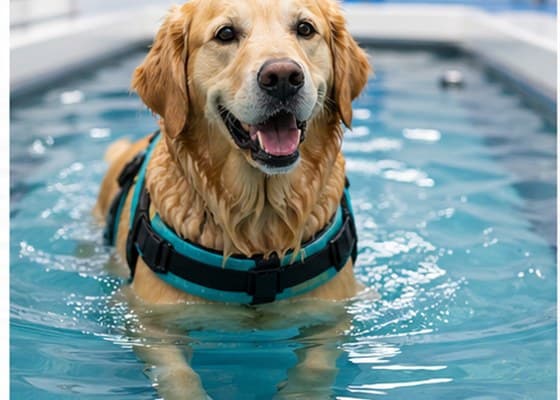
Hydrotherapy uses buoyancy and warm water to support controlled movement with less joint load than many land walks.
When people search for the benefits of dog hydrotherapy, they usually want a straight answer: will warm-water exercise help my dog move more comfortably? For many dogs with arthritis, post-surgery weakness, muscle loss or limited land exercise, the answer can be yes — when a vet agrees it is appropriate and a trained therapist adapts each session.
Buoyancy reduces load through joints and recovering tissues, while water resistance encourages muscle work without the pounding of pavement. That combination is why UK centres use pools and underwater treadmills for rehabilitation and carefully paced fitness. Results still vary. A nervous, painful or medically unstable dog may need a different starting point, and some conditions are better managed on land first.
Use this guide to understand realistic benefits, common myths, and the questions that separate clinical hydrotherapy from a casual swim. When you are ready to compare providers, browse centres on HyperDog Therapy and shortlist ones that ask for veterinary consent and explain goals clearly.
Use this guide as a practical starting point, then compare suitable providers in the centre directory. A directory listing can help you shortlist local options, but the final choice should be based on your dog's health history, veterinary advice, the centre's assessment process and how clearly the team explains their approach.
Before booking, write down your dog's diagnosis if known, current medication, recent surgery dates, exercise limits, behaviour around water and any worries you want to raise. This makes the first call more useful and helps the centre explain whether hydrotherapy, physiotherapy, swimming, underwater treadmill work or a different route may be appropriate to discuss with your vet.
The benefits owners most often notice
Owners rarely describe hydrotherapy as dramatic overnight change. More often they report steadier rising from rest, more even weight bearing, better willingness to walk short distances, or improved confidence around movement after a planned course.
Those changes matter because daily life is made of small tasks: getting into the car, navigating stairs, toileting outdoors and keeping muscle that supports painful joints. Warm water can make early practice of those movement patterns more tolerable when land exercise is limited.
- Lower-impact exercise when walks cause stiffness or lameness
- Support for muscle maintenance during restricted activity
- Controlled cardiovascular work for dogs who cannot tolerate long outings
- Confidence building for dogs who have become hesitant or uneven
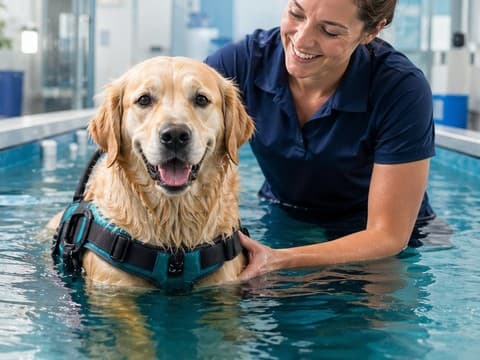
- A structured review point with a therapist who watches gait and fatigue
Why warm water changes the exercise equation
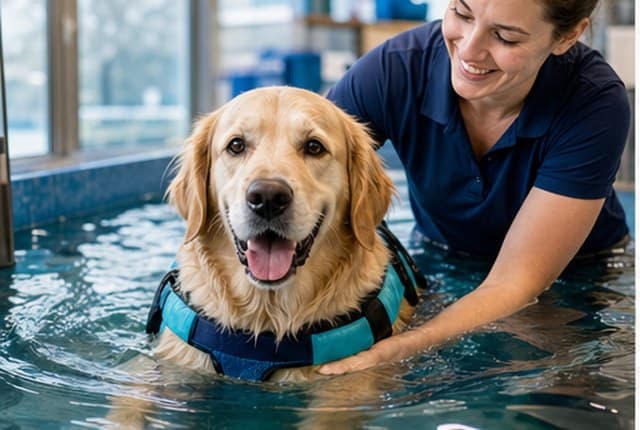
On land, every step transmits force through paws, joints and the spine. In water, buoyancy offsets part of that load. Raising the water level generally increases support; lowering it increases weight bearing. Therapists use that lever carefully, especially after surgery or during flare-ups.
Warmth may also encourage softer muscle tone and more willing movement in some stiff dogs. That is helpful, but warmth is not pain relief on its own. If your dog is still uncomfortable at home, ask your vet about the wider plan before adding more exercise of any kind.
Pool work versus underwater treadmill benefits
Swimming is non-weight-bearing and can suit fitness, confidence or certain rehab stages, but it does not recreate a walking pattern. An underwater treadmill keeps the dog in a gait pattern while water height, belt speed and duration are adjusted.
Neither option is universally better. A dog recovering from knee surgery may need precise treadmill walking; a dog rebuilding stamina after a long rest may later use pool work. The benefit comes from matching the tool to the goal, not from choosing the trendiest facility.
What hydrotherapy cannot do
Hydrotherapy cannot remodel a dysplastic joint, heal a torn cruciate ligament, or replace surgery when surgery is needed. It also cannot fix pain that has not been properly investigated. If lameness is new, worsening or unexplained, start with your vet — not a swim booking.
Be wary of marketing that promises transformation for every dog. A responsible centre will talk about assessment, progression and times when sessions should stop or be shortened.
Who is most likely to benefit
Dogs commonly referred for hydrotherapy include those with osteoarthritis, hip or elbow dysplasia management plans, post-operative orthopaedic rehab, neurological recovery under specialist guidance, and weight-related mobility limits.
Fitness clients without a diagnosis can still benefit from supervised water exercise, but they should still be honest about age, breed risks and any subtle stiffness. Recreational swimming and clinical hydrotherapy are not the same service — see our swimming versus hydrotherapy guide if you are unsure which you need.
How to judge whether the benefits are worth booking
Ask what problem the sessions are meant to change in four to six weeks: stronger hindlimb drive, more symmetrical stride, safer rising, better stamina, or calmer water confidence. Vague packages with no review points are a weaker buy than a short assessed course with clear checkpoints.
Also ask about cost, insurance paperwork, handling for nervous dogs and whether the team will share notes with your vet. Practical details often decide whether a plan is sustainable for your household.
How to use this guide
Start with your dog's current problem rather than a treatment label. This guide on benefits of dog hydrotherapy: what it can (and cannot) do is meant to help you ask better questions before booking.
Write down what has changed, when it started, any vet advice you already have, and what you want your dog to manage more comfortably. Use that note when you contact a centre.
What good providers should explain
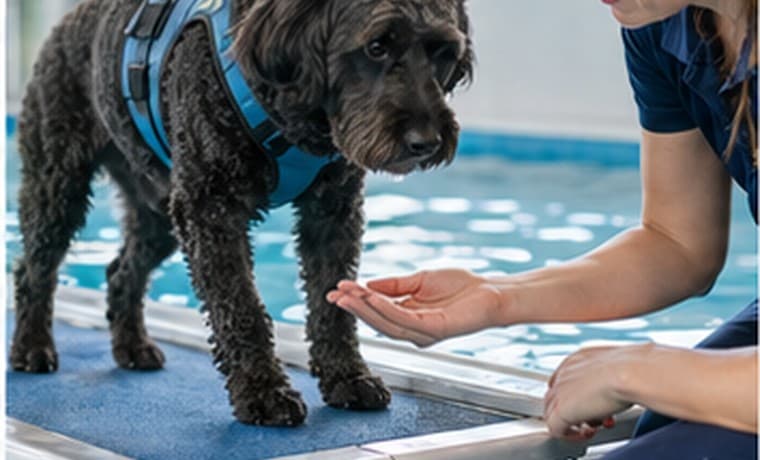
A responsible provider discussing benefits of dog hydrotherapy: what it can (and cannot) do should explain whether veterinary referral or consent is needed, who assesses your dog, how progress is recorded, and how sessions are adapted for nervous, older or post-operative dogs.
Ask about water hygiene or land-exercise safety (as relevant), how dogs enter and leave the facility, what equipment is available, and how many dogs are treated at once.
Questions to take to your first call
Before booking around benefits of dog hydrotherapy: what it can (and cannot) do, ask whether the centre offers therapeutic hydrotherapy, fitness swimming, underwater treadmill work, physiotherapy or a combination — and which option they think fits your dog.
Also ask how the first appointment is structured, whether vet notes are needed, what to bring, how long a session lasts, and what signs would make them stop or change the plan.
- Do you require vet referral or consent?
- Who assesses my dog and records progress?
- Is pool work, treadmill work or physiotherapy most relevant?
- How do you support nervous or older dogs?
- Can you communicate with my vet if needed?
Red flags to watch for
Be cautious if a provider guarantees recovery from benefits of dog hydrotherapy: what it can (and cannot) do, dismisses veterinary input, cannot explain safety processes, avoids qualification questions, or pushes intense exercise for a painful or recently injured dog.
Contact your vet promptly if your dog becomes more lame, unusually distressed, painful to touch, or suddenly less able to stand or move after a session.
When to speak to your vet
Speak with your vet before starting hydrotherapy, physiotherapy, rehabilitation or a new exercise programme, especially if your dog has pain, lameness, wounds, recent surgery, breathing issues, heart concerns, skin infections or a sudden change in mobility.
Contact a vet promptly if your dog seems unwell, is reluctant to stand, cries out, suddenly worsens after activity, or has an injury that has not been assessed. Therapy providers can support a plan, but they should not be used as a substitute for diagnosis or urgent veterinary care.
Frequently asked questions
How soon might I see benefits from dog hydrotherapy?
Some dogs look more relaxed or confident after early sessions, but strength and gait changes usually need a planned course with reviews. Your therapist should set expectations based on your dog's diagnosis and baseline.
Are the benefits of hydrotherapy the same for every dog?
No. Age, pain level, body condition, temperament, surgical status and home management all change what is realistic. Two dogs with the same diagnosis can need different session designs.
Can hydrotherapy help a healthy dog stay fit?
Supervised fitness swimming or treadmill work can be useful enrichment and conditioning for some dogs, especially when weather or pavement limits land exercise. It should still be introduced gradually and stopped if the dog shows pain or distress.
Is hydrotherapy better than physiotherapy?
They often work together rather than compete. Physiotherapy may focus on assessment, manual techniques and land exercises; hydrotherapy is one way to load movement in water. Your vet can help you decide which to start with.